Damp Proofing in Oxford Period Homes: Rising Damp, Breathable Lime & Floodplains
The definitive conservation guide to diagnosing and permanently remediating damp in Oxford Victorian, Edwardian, and Georgian homes. Understanding Oxford's high alluvial floodplains, why chemical DPC injections destroy historic bricks, applying breathable Natural Hydraulic Lime (NHL) plaster, restoring subfloor cross-ventilation, French perimeter drainage, and 2026 itemised costs.
Quick Answer: How Do You Fix Damp in an Oxford Victorian or Georgian Home?
In 2026, authentic damp remediation in an Oxford period home costs between £85 and £140 per m² for a traditional three-coat breathable hydraulic lime plaster (NHL 2 or NHL 3.5), plus £45 to £70 per m² to hack off non-breathable gypsum or waterproof sand-cement renders (£4,800–£8,500 for a typical ground-floor room; £14,000–£26,000+ for whole ground-floor remediation). Oxford sits on the alluvial gravels and floodplains of the Thames (the Isis) and Cherwell, creating high seasonal water tables. Chemical DPC injections and waterproof cement tanking almost always fail in historic Oxford red brickwork because they trap ground moisture inside solid masonry, forcing damp up to 2 metres high and causing joist rot. Permanent resolution requires breathable lime plasters, restoring subfloor cross-ventilation (air bricks), and lowering external ground levels with French perimeter drainage.
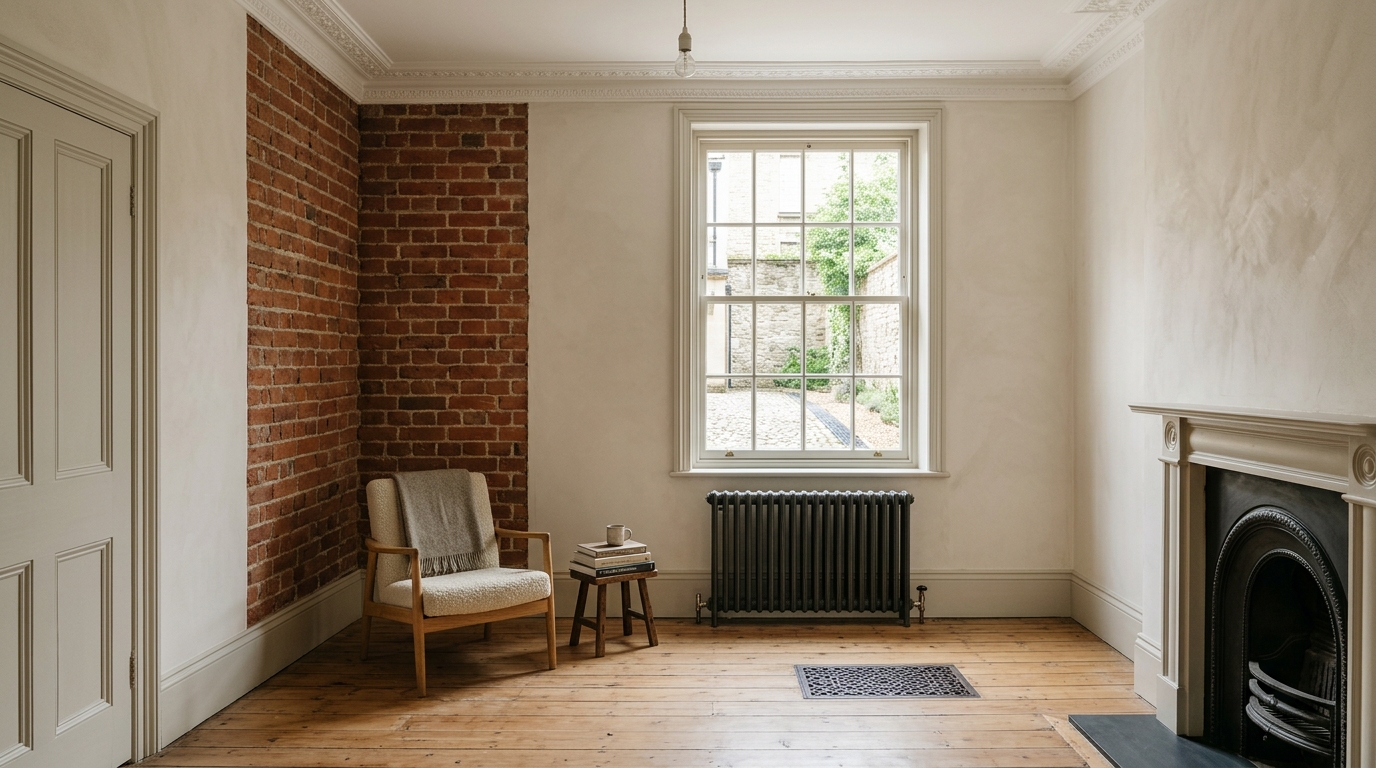
Heritage damp remediation in Jericho, Oxford (OX2): Transition from exposed historic solid red brickwork to hand-troweled breathable Natural Hydraulic Lime (NHL) plaster, with restored pine floorboards and gravel French drain visible through the sash window.
Figure 1.0: Authentic conservation plastering using breathable hydraulic lime (NHL 2) on a Victorian solid brick exterior wall in North Oxford, eliminating trapped moisture without chemical injections.
1. The Oxford Damp Conundrum: River Floodplains & Solid Brickwork
Damp is the single most frequent structural defect identified in RICS Level 3 building surveys across Oxford. However, the vast majority of damp issues in Oxford are severely misdiagnosed by commercial damp-proofing salesmen who attempt to treat 140-year-old solid masonry as if it were modern cavity construction.
To understand damp in Oxford, one must understand its unique hydrology. Oxford was established at the confluence of the River Thames (historically known as the Isis) and the River Cherwell. Expansive Victorian and Edwardian suburbs—including Jericho, Osney Island, Grandpont, St Thomas', St Clement's, and Abingdon Road—were constructed directly on alluvial floodplains and permeable river gravels overlaying impermeable Oxford Clay.
During autumn and winter, the ground water table across these low-lying districts regularly rises to within 40cm to 80cm of the ground surface. Houses built before 1919 feature solid 9-inch (one-brick thick) walls bonded with porous lime mortar, with either no original damp-proof course (DPC) or thin slate/bitumen courses that have cracked or bridged over a century of traffic vibrations and ground settlement.
| Remediation Methodology | Commercial Chemical DPC & Cement Tanking | Crawford Conservation & Breathable Lime |
|---|---|---|
| Underlying Philosophy | Barrier method: attempts to seal and block water using impervious plastics and dense cement renders. | Breathability: allows historic masonry to absorb and evaporate moisture naturally into the ambient air. |
| Impact on Historic Brick | Accelerates decay: trapped ground salts crush soft Victorian red bricks into powder behind the cement shell. | Protects masonry: sacrificial lime mortar wicks salts harmlessly to the surface without spalling brick faces. |
| Timber Joist End Risk | Extreme: trapped water saturated behind cement migrates into embedded joist ends, triggering fungal dry rot. | Zero: timber joists are ventilated, isolated with DPC wraps, and kept below 16% Wood Moisture Equivalent. |
| Heritage Compliance | Illegal on Grade II listed buildings; rejected by Oxford City Council Conservation Officers. | Fully compliant with Historic England (SPAB) guidance and Oxford Listed Building Consent. |
2. Why Chemical DPC Injection & Cement Renders Fail in Historic Oxford Brick
Every month, Crawford Construction is called to Oxford period homes where an unaccredited contractor injected a chemical DPC cream 2 to 5 years earlier, yet the homeowner now suffers from worse damp, peeling wallpaper, and crumbling baseboards:
1. The "Free Damp Survey" Electric Meter Fallacy
Salesmen wave hand-held electrical resistance pin meters (Protimeters) against plaster walls. These meters are designed solely to test moisture in softwood timber. When placed against historic plaster containing naturally occurring conductive mineral salts (nitrates and chlorides deposited by 100 years of coal fires and ground evaporation), the meter flashes red and beeps hysterically—falsely diagnosing "severe rising damp" on walls that are simply salt-damp or suffering from surface condensation.
2. Chemical Creams Cannot Diffuse Through Saturated Solid Brick
Chemical DPC involves drilling 12mm holes along the mortar bed and injecting silane/siloxane emulsion. In Oxford's saturated ground conditions, the pores of the brick and lime mortar are already filled with groundwater. The water-repellent chemical cannot migrate through liquid water, leaving massive untreated dry gaps where capillary action continues unimpeded.
3. The Sand-Cement Trap & Rotting Joist Ends
To cover up the fact that chemical injection does not stop rising damp, DPC contractors hack off plaster up to 1 metre and apply a dense 3:1 sand-and-cement render with waterproof additives (such as SBR). Because cement is completely impermeable to water vapour, groundwater cannot evaporate into the room. Instead, moisture is forced higher up the wall (re-emerging at 1.2m–1.5m above the cement line) or forced sideways into the pocketed ends of suspended timber floor joists. Within 36 months, the unventilated joist ends rot completely, causing timber subfloor collapse and dry rot outbreaks.
3. The True Conservation Solution: Natural Hydraulic Lime (NHL) Plaster
Historic buildings manage moisture through breathability and continuous passive evaporation. When a solid brick wall is rendered in natural lime plaster, it acts as a giant sponge that absorbs minor ground and atmospheric moisture, which then evaporates harmlessly into the room's circulating air without causing staining, mould, or dampness.
Scratch Coat (Dubbing Out)
9mm–12mm base coat of NHL 3.5 hydraulic lime mixed with coarse sharp washed sand and authentic animal hair reinforcement (goat or horse hair). Hair provides tensile flexibility, bridging historic settlement hairline fractures without cracking.
Float Coat (Straightening)
6mm–9mm intermediate leveling coat of NHL 2 or NHL 3.5 with medium-grade sand. Ruled flat with timber straightedges and keyed with a devil float to receive the final setting coat. Allows controlled moisture transmission across the entire wall plane.
Fine Setting Coat & Silicate Finish
2mm–3mm finish coat of non-hydraulic lime putty or NHL 2 with ultra-fine silver sand, hand-troweled smooth. Decorated exclusively with breathable mineral silicate paints (Keim / Earthborn) that form micro-crystalline bonds without blocking vapour pores.
Natural Anti-Mould & Biocidal Protection (pH 12+)
Natural hydraulic lime is naturally caustic during curing and maintains a high alkaline chemical profile (pH 12+). Toxic black mould (Stachybotrys chartarum), dust mites, and fungal spores cannot germinate or survive on alkaline lime surfaces, creating a dramatically healthier indoor living environment for families in Oxfordshire with asthma or allergies.
4. Subfloor Timber Ventilation & Joist End Restoration
Over 70% of ground-floor damp issues in Oxford Victorian terraces stem from subfloor condensation beneath suspended timber floorboards rather than rising damp through brickwork:
The Subfloor Health Checklist:
Over 120 years, council resurfacing and private block paving have buried historic terracotta air vents. We excavate and install high-capacity telescopic periscope air vents at 2-metre intervals, creating continuous through-draft that sweeps away ground humidity.
Where old pine joists embedded in damp external brickwork have decayed, we cut back the rot, treat the masonry with biocidal boron, and sister new C24 structural timbers bolted with M12 coach bolts, resting on heavy DPC sleeves that isolate wood from cold brick.
We clear the underfloor void of accumulated builder's rubble, ensuring a minimum 150mm clear air space between the bare earth and the underside of timber joists, overlaying damp soil with a breathable geomembrane if required.
Dry rot requires wood moisture levels above 20% to germinate. With proper cross-ventilation restored, timber joist moisture drops to 12%–15% WME, permanently immunising the home against fungal decay without toxic chemical timber treatments.
5. High External Ground Levels & French Perimeter Drainage
Under UK Building Regulations Approved Document C, external ground levels must be maintained at least 150mm (6 inches) below internal finished floor level. In Oxford, over a century of raised garden flowerbeds, block paving, and concrete side passages have raised external ground levels directly against or above internal floorboards—causing severe lateral "bridging damp":
The Crawford External Drainage Remediation Protocol:
6. Oxford Conservation Areas & Grade II Listed Building Regulations
Over 18 designated Conservation Areas span Oxford City Council's jurisdiction (including North Oxford Victorian Suburb, Jericho, Headington Hill, and Central Oxford). If your property is Grade II or Grade II* listed:
- Criminal Offence of Unauthorised Alteration: Stripping original lath-and-plaster walls, sandblasting brickwork, or injecting chemical DPC without formal Listed Building Consent is a criminal offence punishable by unlimited fines.
- Reversibility & Historic Fabric Preservation: Oxford City Council conservation officers mandate that any remedial damp works must be reversible, breathable, and historically authentic (using matching lime mortars, horsehair binders, and mineral silicate washes).
- Crawford Listed Building Experience: Crawford Construction prepares comprehensive Heritage Impact Statements, manages listed building consent applications, and liaises directly with Oxford City Council conservation officers to guarantee full regulatory compliance.
7. 2026 Oxford Damp Proofing & Lime Remediation Cost Benchmarks
Below are realistic, itemised 2026 price benchmarks reflecting specialist heritage conservation rates across Oxford:
| Remediation Scope & Area | Typical Inclusions | Typical Cost Range (2026) | Duration |
|---|---|---|---|
Diagnostic Heritage Damp Survey Calcium carbide & hygrometer testing | Thermal imaging, subfloor endoscopy, gravimetric salt analysis, and comprehensive heritage specification report. | £650 – £1,200 | 1 day survey + 5 day lab |
Single Ground-Floor Reception Room e.g. 4.5m x 3.8m Victorian lounge | Hack off damaged gypsum/cement, 3-coat NHL 3.5 lime plaster, joist end inspection, air brick unblocking, and breathable paint. | £4,800 – £8,500 | 2 – 2.5 weeks |
External Perimeter French Drain System 10m–18m rear or side return wall | Excavate ground by 200mm, Terram geotextile membrane, 100mm perforated drain pipe, 20mm gravel splash margin to soakaway. | £2,800 – £5,500 | 4 – 6 days |
Comprehensive Whole-Ground-Floor Package 3-bed Victorian terrace (Jericho / East Oxford) | Whole ground-floor lime re-plastering, timber joist sistering, subfloor cross-ventilation, external French drain, and mineral decorating. | £14,000 – £26,000+ | 4 – 6 weeks |
Itemised Specialist Conservation Unit Rates (2026):
8. Protecting Oxford Property Value & Overcoming Mortgage Retentions
When buying or selling a home in Oxford, mortgage lenders frequently instruct RICS surveyors who note "high moisture readings" on solid brick walls, automatically slapping a £10,000 to £25,000 mortgage retention on the transaction until damp specialist reports are supplied.
Overcoming Mortgage Retentions
Lenders refuse generic chemical DPC quotes for period properties because RICS guidance now cautions against chemical injection in pre-1919 buildings. Crawford provides independent gravimetric moisture testing and formal Heritage Damp Remediation Certificates, allowing mortgage lenders to release retentions immediately.
Permanent Capital Equity Preservation
Investing in authentic breathable lime plastering, subfloor ventilation, and perimeter drainage permanently protects timber joists and historic brickwork, ensuring the property commands peak market value without surveyors raising damp red flags during future sales.
9. The Crawford 5-Stage Conservation Remediation Protocol
Crawford Construction approaches historic masonry damp with rigorous scientific methodology:
Diagnostic Thermal & Salts Survey
We use thermal imaging cameras, subfloor endoscopes, and laboratory carbide test samples to identify the exact cause (condensation, high ground levels, leaking gutters, or perched water table) rather than jumping to chemical assumptions.
Source Elimination & External Drainage
We fix the root cause: lowering external ground levels, installing perimeter gravel French drains, repairing cracked cast-iron downpipes, and unblocking subfloor air vents.
Gentle Stripping of Non-Breathable Materials
We strip impervious gypsum plaster, cement render, and vinyl wallpapers back to bare sound brickwork, raking out contaminated mortar joints without damaging brick arrises.
Subfloor Joist Restoration
We inspect joist bearings, sister decayed timber ends with pressure-treated C24 structural timbers, isolate timber from masonry with heavy DPC wraps, and restore through-flow ventilation.
Three-Coat Hydraulic Lime Plastering & Mineral Decorating
Our master plasterers apply hair-reinforced NHL 3.5 scratch, float, and setting coats, finished in breathable Keim mineral silicate paints for lifelong breathability and zero mould growth.
Frequently Asked Questions: Damp Remediation in Oxford Period Homes
Scientific and conservation guidance on treating damp, breathable lime, floodplains, and protecting historic Oxford masonry.
Book an Authentic Heritage Damp & Timber Survey
Avoid destructive chemical injections and peeling cement renders. Consult with Crawford Construction's conservation surveyors to diagnose the true root cause and restore your home using authentic, breathable lime masonry.
Damp & Timber Feasibility Survey
Book a comprehensive site diagnostic survey with our lead conservation masonry surveyor. We assess moisture levels, examine subfloor joists, inspect external ground levels, and provide a fully itemised heritage remediation plan.
Let's build
somethingremarkable.
From first sketch to final handover — Oxfordshire's trusted team for homes built with precision, craftsmanship and care.