Loft Conversion Suitability Checker: Will Your Loft Convert?
Can your loft be converted? Answer 5 quick questions and find out in under a minute — free checker built on 200+ Oxfordshire loft conversions.
Most UK lofts can be converted if there is at least 2.2 metres of head height from the top of the ceiling joists to the underside of the ridge — and this free loft conversion suitability checker tells you where your home stands in under a minute. Answer five quick questions about your roof and property, and you'll get an instant indication of whether your loft is convertible, which conversion type is likely to suit it, and a realistic cost range based on 2026 Oxfordshire build prices.
How does this loft conversion suitability checker work?
The checker weighs your answers against the three factors that decide almost every loft conversion: head height, roof structure and planning constraints. The 2.2-metre threshold comes from Building Regulations — once you allow for insulation, new floor joists and plasterboard, anything less leaves you without the practical standing height a habitable room needs. Roof structure determines cost and method: traditional cut rafters, standard in Victorian and Edwardian terraces, convert readily, while post-1965 trussed roofs need steels designed by a structural engineer (calculations we handle in-house). Finally, your property type and conservation area status shape which conversion types are realistic and whether Permitted Development rights apply.
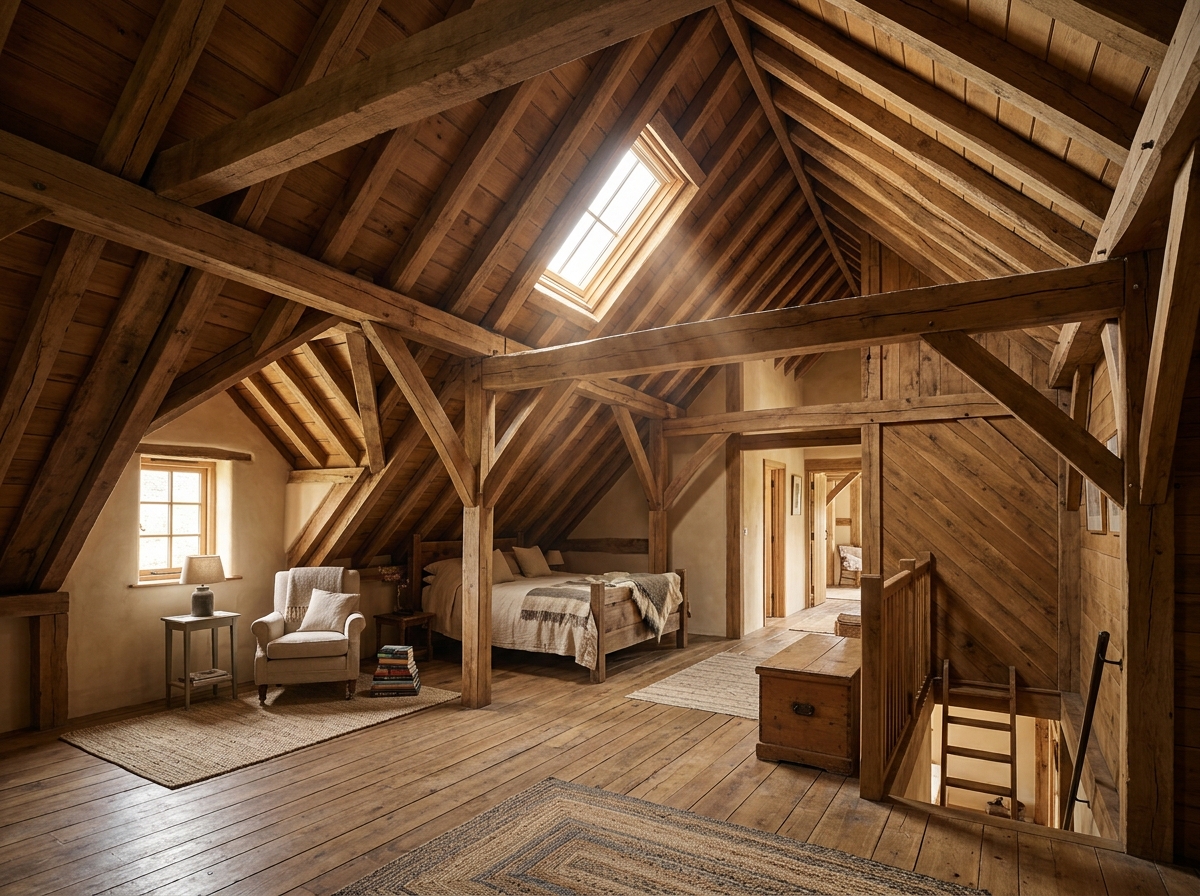
Attic Framework Comparison
Comparing traditional rafter framing (where structural loads sit on external brickwork outlines) against trussed support webs (where internal diagonals occupy the center attic area).
The cost ranges shown are our real 2026 figures for Oxfordshire: £45,000 to £75,000 — see the full loft conversion cost breakdown, with simple Velux conversions at the lower end and full mansard rebuilds at the top. They come from itemised, fixed-price quotes on completed jobs — not national averages scraped from the internet.
What head height do you need for a loft conversion?
You need roughly 2.2 metres at the ridge for a comfortable conversion, and 2 metres of clear headroom over the new staircase to satisfy building control. If you're between 2m and 2.2m, all is not lost. A dormer adds usable height across a large part of the floor, and in some Victorian terraces the ceilings below are tall enough to lower slightly. In East Oxford we combined a loft conversion with a basement conversion and rear extension on a Victorian terrace — proof that even compact terraced homes can gain serious space when the design is right.
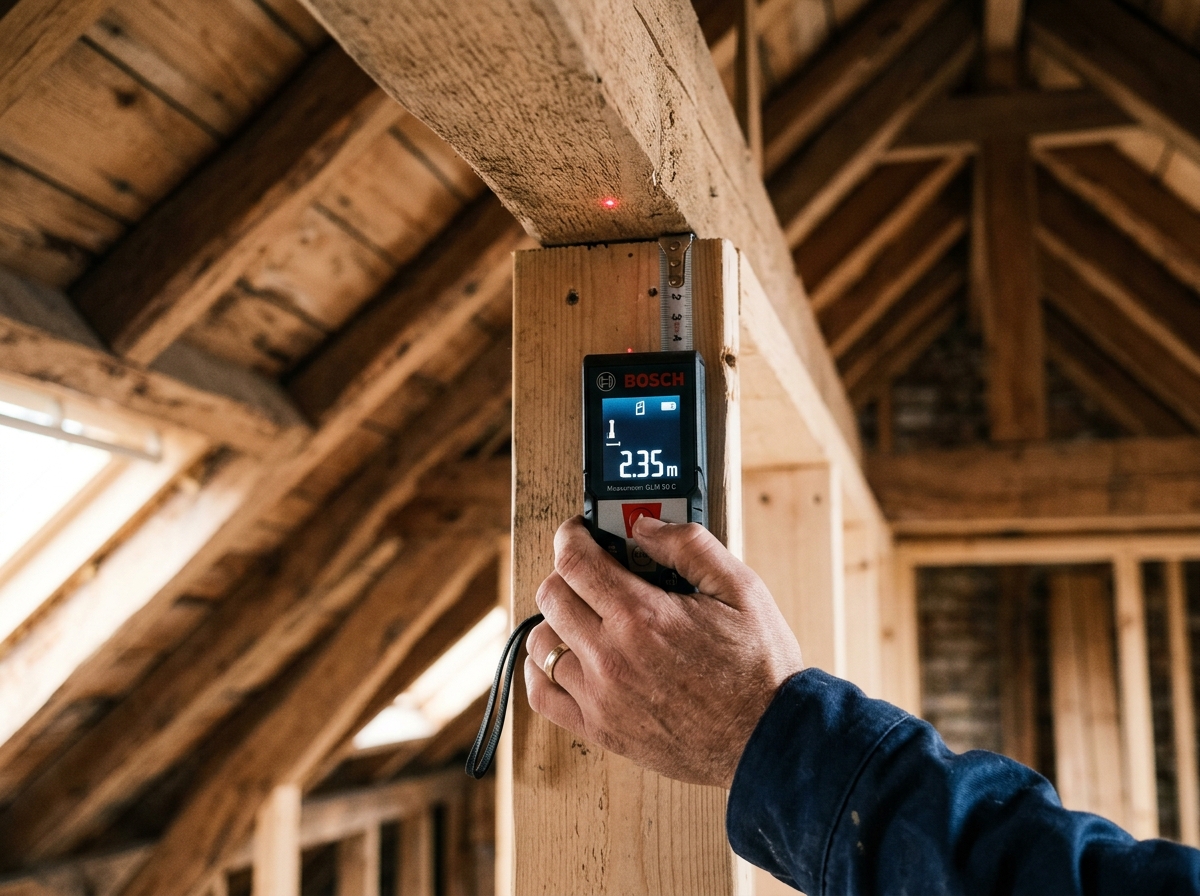
Loft Height Clearance Check
Verifying height thresholds using a standard manual tape measure. Checking the joist levels beforehand confirms if insulation layers fit within regulatory clearance limits.
Which roof types are easiest to convert?
Traditional rafter roofs are the most straightforward, which is good news for Oxford, where much of the housing stock is Victorian or Edwardian terracing built exactly this way. Trussed roofs, common in homes built after the mid-1960s, are still very convertible — the W-shaped webs are replaced with steel beams — but expect the structural work to push you towards the middle of the cost range. Hipped roofs on 1930s semis often suit a hip-to-gable conversion, which squares off the sloping side to create a full-height room.
Do you need planning permission for a loft conversion?
Often not — many loft conversions fall under Permitted Development rights, provided you stay within volume limits and design rules. But in Oxford it pays to check carefully: Article 4 Directions in conservation zones remove some of those rights, and listed buildings always need Listed Building Consent. We handle planning applications, Building Regulations, structural calculations and Party Wall etc. Act 1996 notices in-house, and we've worked successfully with conservation officers on heritage projects across the county. Terraced and semi-detached homeowners should also budget time for party wall agreements with neighbours — typically resolved well before work starts.
What happens after the checker?
The checker gives you a strong indication; a site visit gives you certainty. James Crawford, our Project Director, or one of our surveyors will measure the loft properly, inspect the roof structure and check your planning position — then you'll receive an itemised, fixed-price quote with no vague estimates. Every Crawford loft conversion comes with a 10-year workmanship guarantee, £10 million liability insurance, and staged payments tied to completed milestones, so you never hand over large sums upfront. We're FMB-listed and TrustMark approved.
If the loft conversion suitability checker suggests your home has potential — and most do — the next step is simple. Book a free site consultation, or call us on +44 1865 554333 for an honest, no-obligation view of what your loft could become. A dormer conversion with Juliette balcony and ensuite in Summertown started with exactly this conversation.
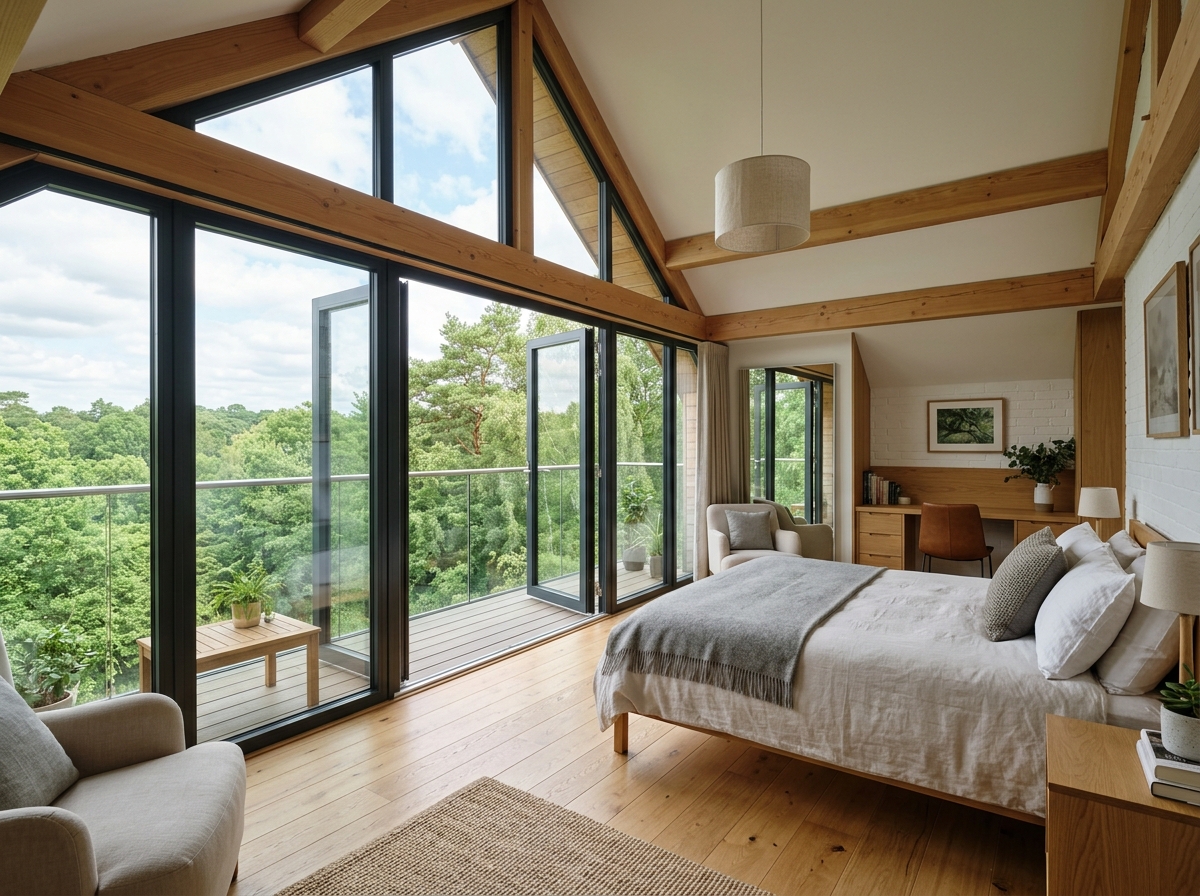
Summertown Dormer Conversion
Completed loft conversion featuring custom built-in wardrobes, double-glazed windows, and Juliette balcony lines overlooking Summertown gardens.
Note: Visit our loft conversions across Oxford and surrounding Oxfordshire areas page for full structural details, or view our single-storey extensions options.
Frequently Asked Questions
Answers to common structural questions regarding loft conversion feasibility.
Let's build
somethingremarkable.
From first sketch to final handover — Oxfordshire's trusted team for homes built with precision, craftsmanship and care.